Research and Development

My Approach: Research & Development — Building the Evidence
In structural design, tradition and innovation must talk to each other. That conversation happens through research and development. I believe R&D is not a lab exercise — it's the bridge between what our ancestors knew and what the next earthquake will test.
Vision and Innovation
My vision is to build Nepal's own seismic knowledge base — not borrowed from California or Japan, but grown from our soil, our materials, and our buildings. I am committed to testing bamboo species from local forests, documenting how traditional timber joints perform under lateral loads, and publishing findings that any mason or engineer can use.
Identifying Unique Challenges
The problem is not a lack of materials — it's a lack of data. Which bamboo species grown in Nepal has the highest tensile strength? How many monsoon cycles can treated bamboo survive? Does a traditional Newari timber band perform better than a modern concrete band? These questions have no local answers — yet. My R&D work exists to answer them.
Resolving Complex Problems
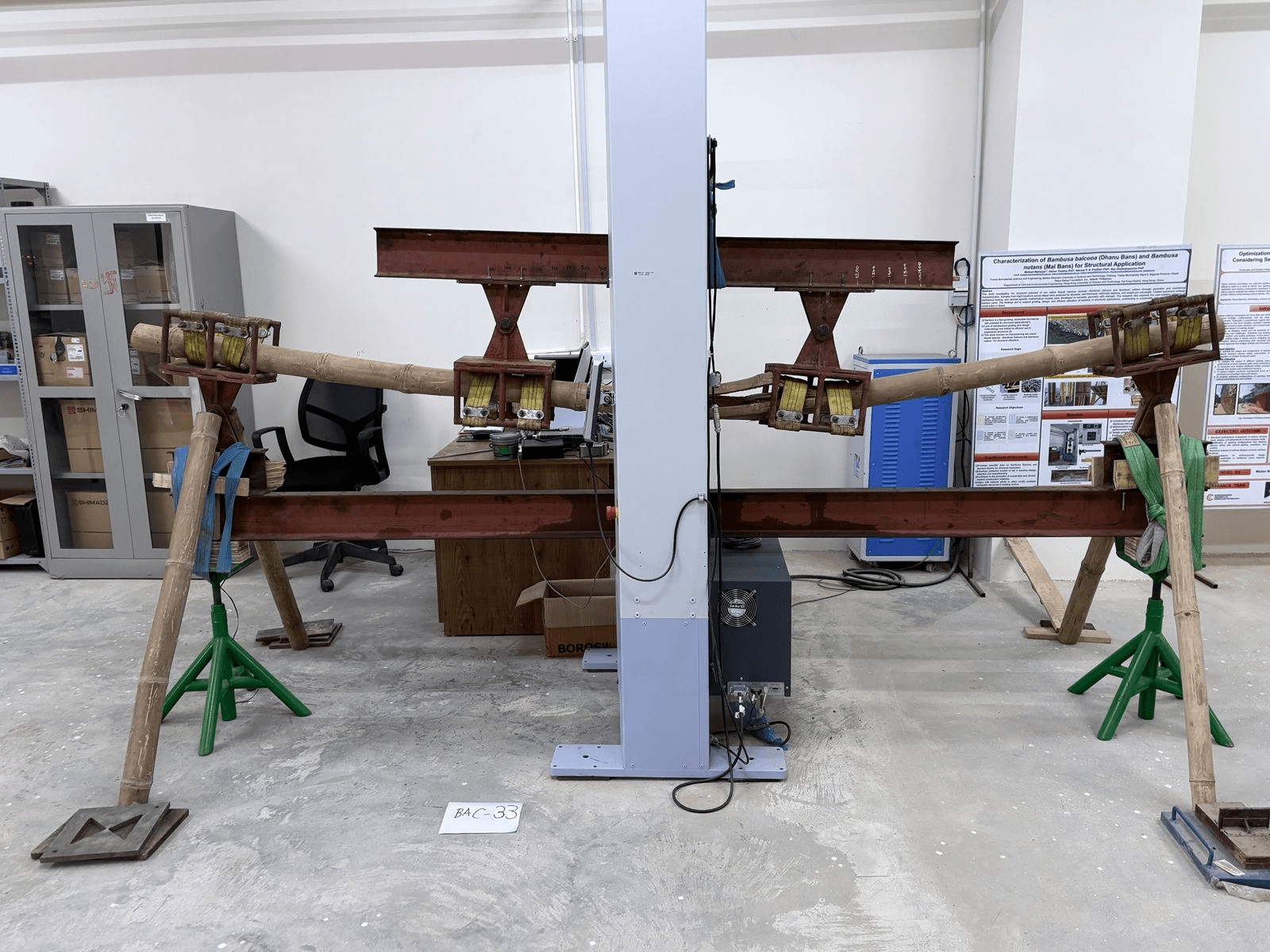
Research for me is not academic — it's practical. I set up field tests, not just lab simulations. I load bamboo trusses until they crack. I shake scaled-down models of pagoda roofs on shake tables. I measure, fail, adjust, and test again. The goal is not perfection — it's predictability. I want to know exactly how a material fails so I can design around that failure.
User-Centric Design — Research Serves the Builder
The cornerstone of my R&D approach is usability. My research is not for journals — it's for masons, contractors, and homeowners. I turn test results into simple charts, checklists, and guidelines. A mason doesn't need a stress-strain curve. They need to know: how many bamboo culms per square meter? What treatment works in 24 hours? That's the research that matters.
Meeting User Needs — From Lab to Field
I address the real gaps in Nepal's construction knowledge: species characterization, treatment protocols, joint testing, and long-term durability. Whether it's documenting how a 500-year-old temple survived seven earthquakes or testing a new bamboo-lime composite, my R&D work exists to make the next building safer than the last.

