
Material Testing

AAC Test
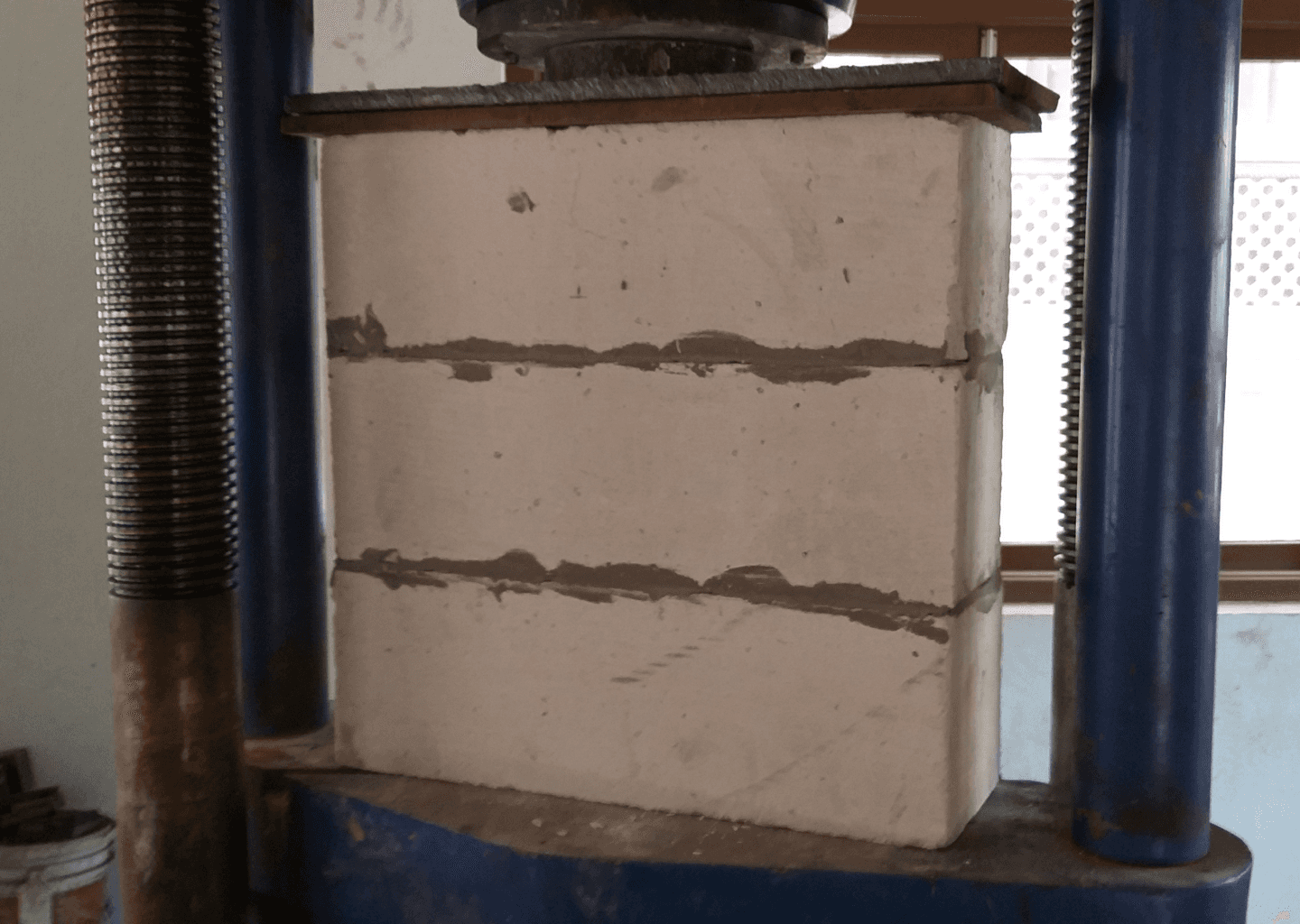
The AAC block prism test is conducted to evaluate the compressive strength of Autoclaved Aerated Concrete (AAC) blocks. The process begins with cutting the AAC blocks into standardized prism sizes, typically 200 mm x 200 mm x 600 mm, followed by curing for a minimum of 28 days to ensure proper strength development. Once cured, the dimensions of the prisms are accurately measured, and they are subjected to a compressive testing machine, where a load is applied until failure occurs. The maximum load recorded is used to calculate the compressive strength, which is then compared against relevant standards to assess compliance.
Shotcrete Test
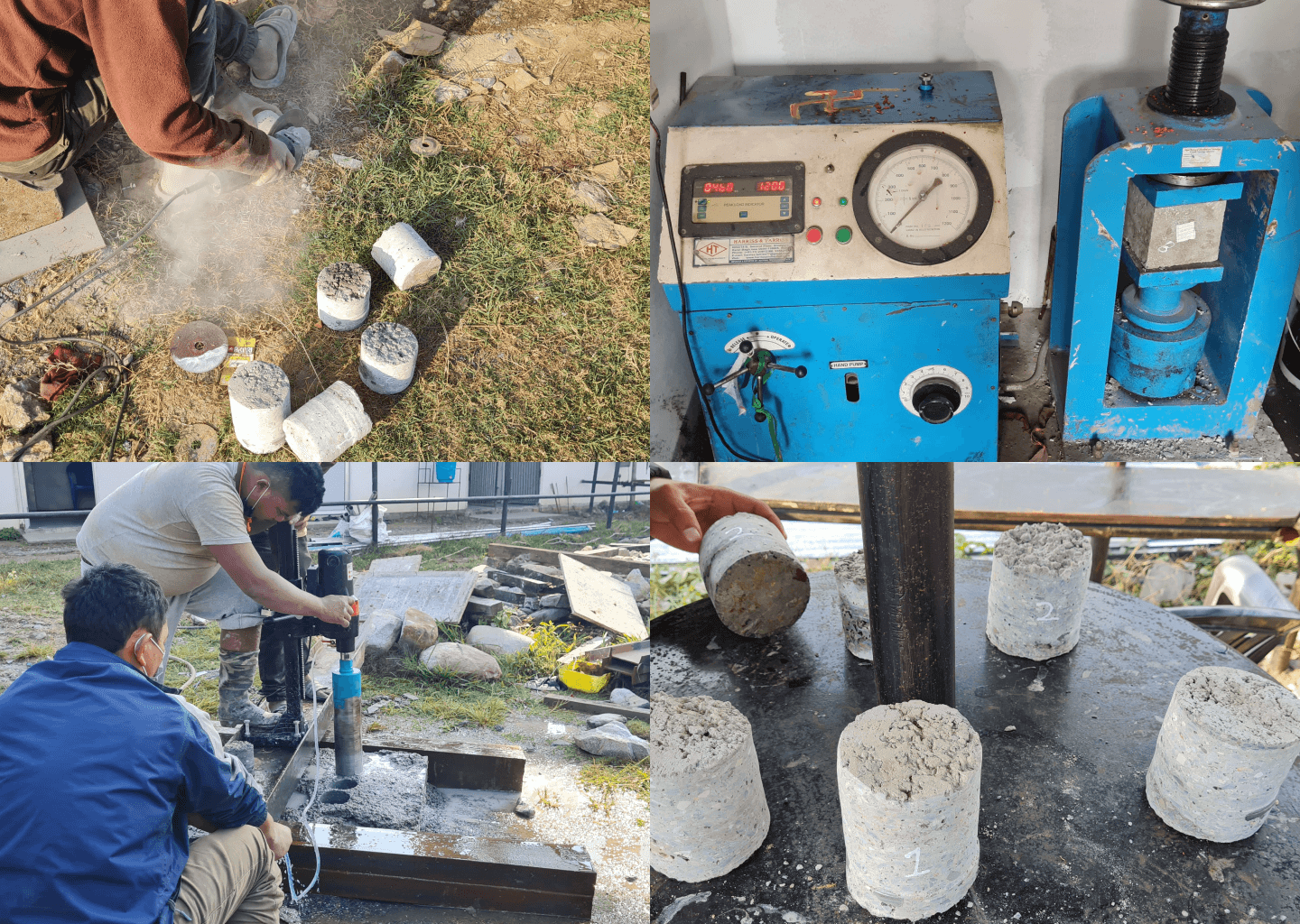
The shotcrete test assesses the quality and performance of shotcrete, a technique used to apply concrete or mortar through a nozzle under high pressure. Key testing methods include evaluating the wet and dry mix properties, monitoring the application process for proper adhesion, and measuring bond strength. Samples are prepared in standardized molds, cured, and then tested for compressive strength, typically after 28 days. Results, including air content and density assessments, are compared against specified standards to ensure the shotcrete meets project requirements and performs effectively in structural applications.
Timber Test
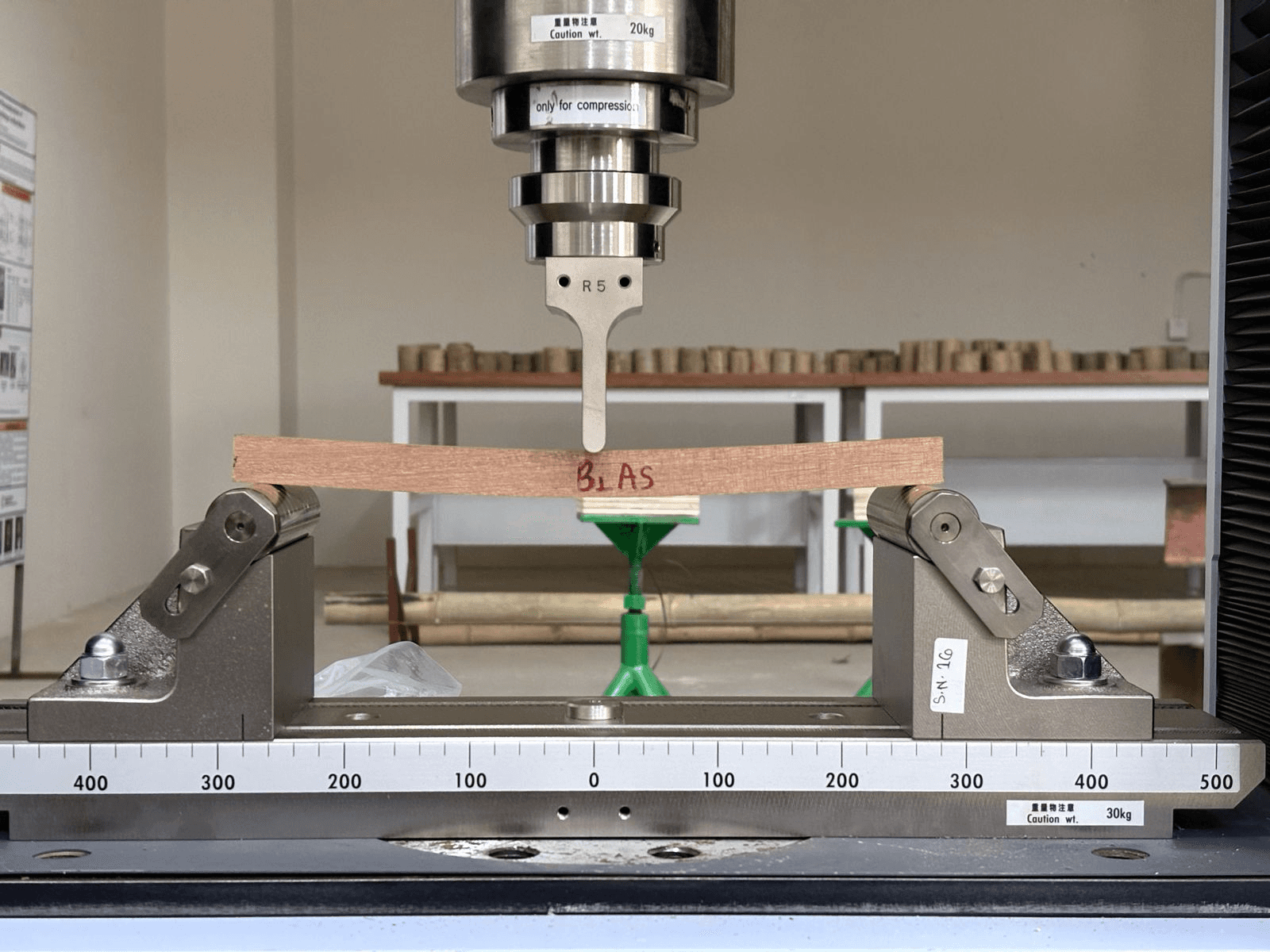
Timber testing is essential to determine a wood's suitability for various uses. Tests evaluate physical properties like moisture content and density, mechanical properties such as strength, stiffness, and toughness, and chemical properties including decay and insect resistance. These assessments ensure quality control, aid product development, inform structural design, and predict a timber's lifespan, making it a crucial process in the wood industry.
Stone Test
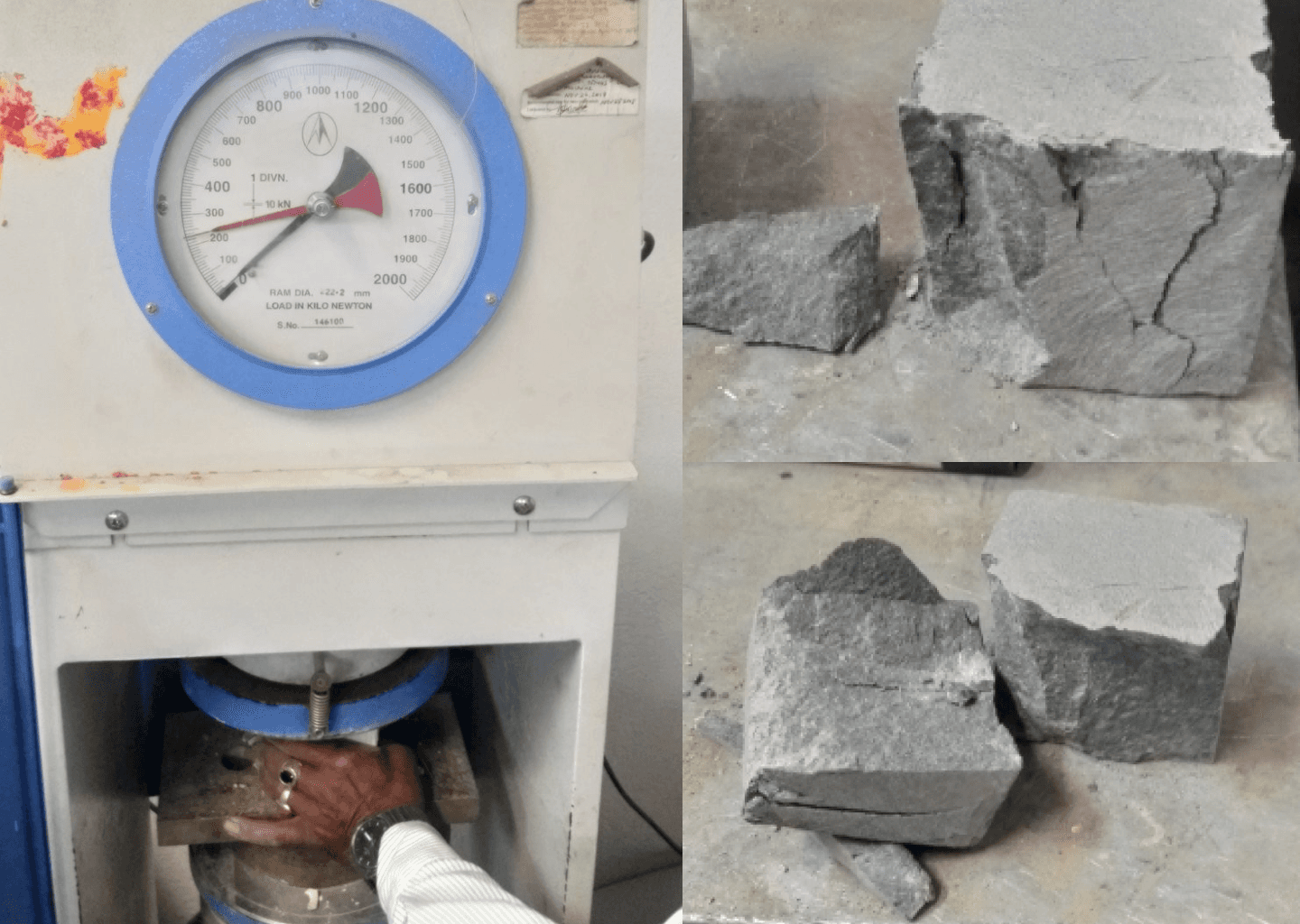
Stone testing is crucial to assess its suitability for construction and other applications. It involves evaluating physical properties like strength, hardness, and durability through tests such as crushing, impact, and water absorption. Chemical properties like acid resistance and mineral composition are also analyzed. These tests help determine a stone's load-bearing capacity, weathering resistance, and overall performance, ensuring its reliability and longevity in various structures.
Slump Test
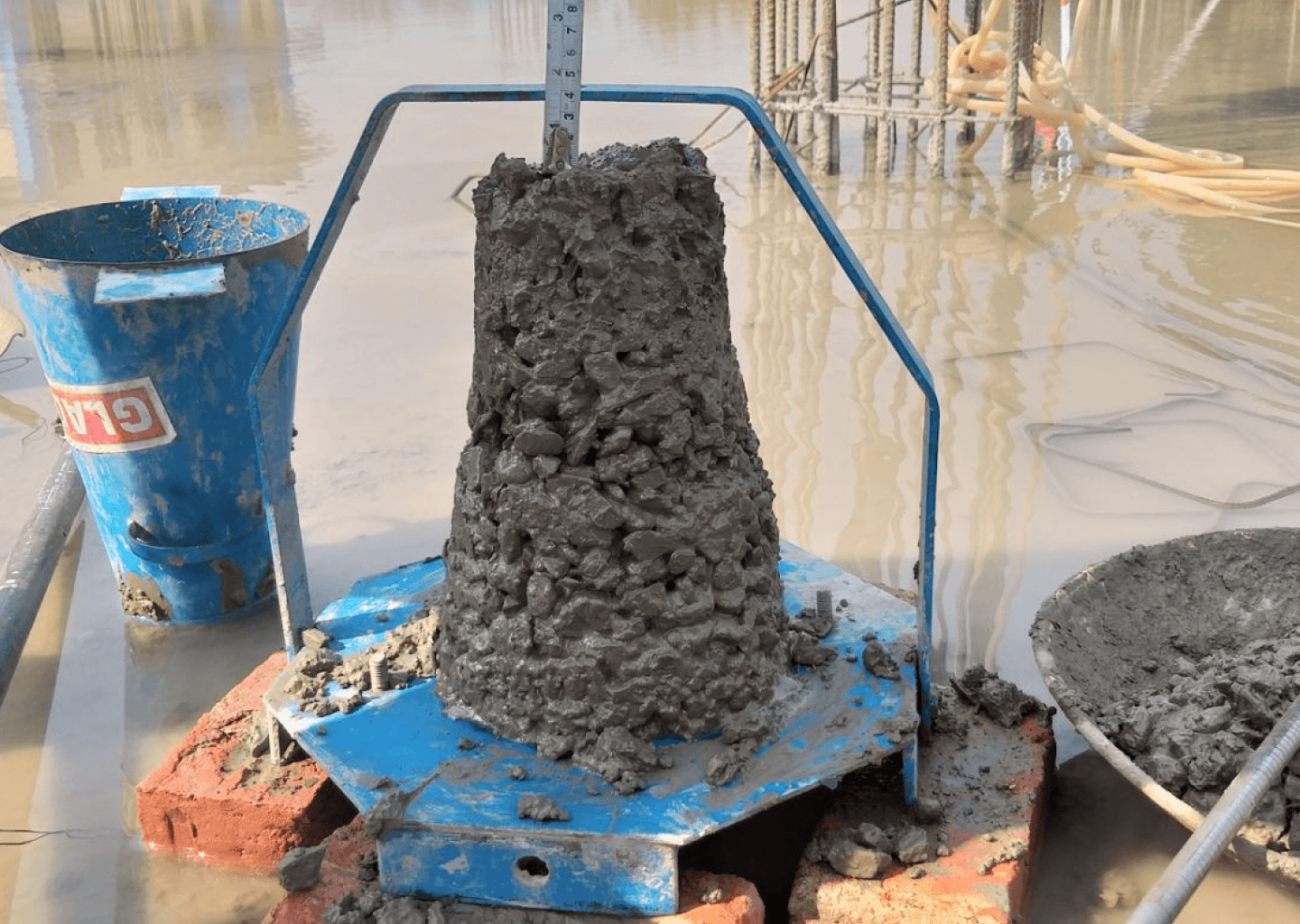
A concrete slump test measures the consistency of a concrete batch to see how easily the concrete will flow. The test not only observes consistency between batches, but it also identifies defects in a mix, giving the operator a chance to amend the mix before it is poured on site.
NTD Test
NDT of Concrete
Non-destructive testing (NDT) of concrete is a crucial process to evaluate the quality, integrity, and condition of concrete structures without damaging them. Various techniques, such as ultrasonic pulse velocity, rebound hammer, and ground penetrating radar, are used to assess strength, detect defects like cracks and voids, measure thickness, and evaluate reinforcement corrosion. NDT is essential for quality control during construction, assessing the condition of existing structures, and informing repair or rehabilitation decisions.
NDT of Wood
Non-destructive testing (NDT) of wood is essential for evaluating its quality, strength, and internal structure without damaging the material. Techniques such as ultrasonic testing, X-ray imaging, and vibration analysis are used to detect defects like knots, cracks, and decay. These methods help in grading timber, assessing the condition of wooden structures, and optimizing wood utilization. NDT plays a crucial role in ensuring the safety and durability of wood products.
NDT of Rebar
Non-destructive testing (NDT) of rebar is essential for assessing the condition and integrity of reinforced concrete structures. Techniques such as ground penetrating radar (GPR) can locate and measure the depth of rebar, while half-cell potential measurements can estimate corrosion rates. Ultrasonic testing can assess rebar diameter and condition, and magnetic flux leakage can detect cracks and corrosion. These methods help evaluate the structural health of concrete, identify potential weaknesses, and inform repair or maintenance decisions without damaging the structure.
Pull out test of anchorage rebar
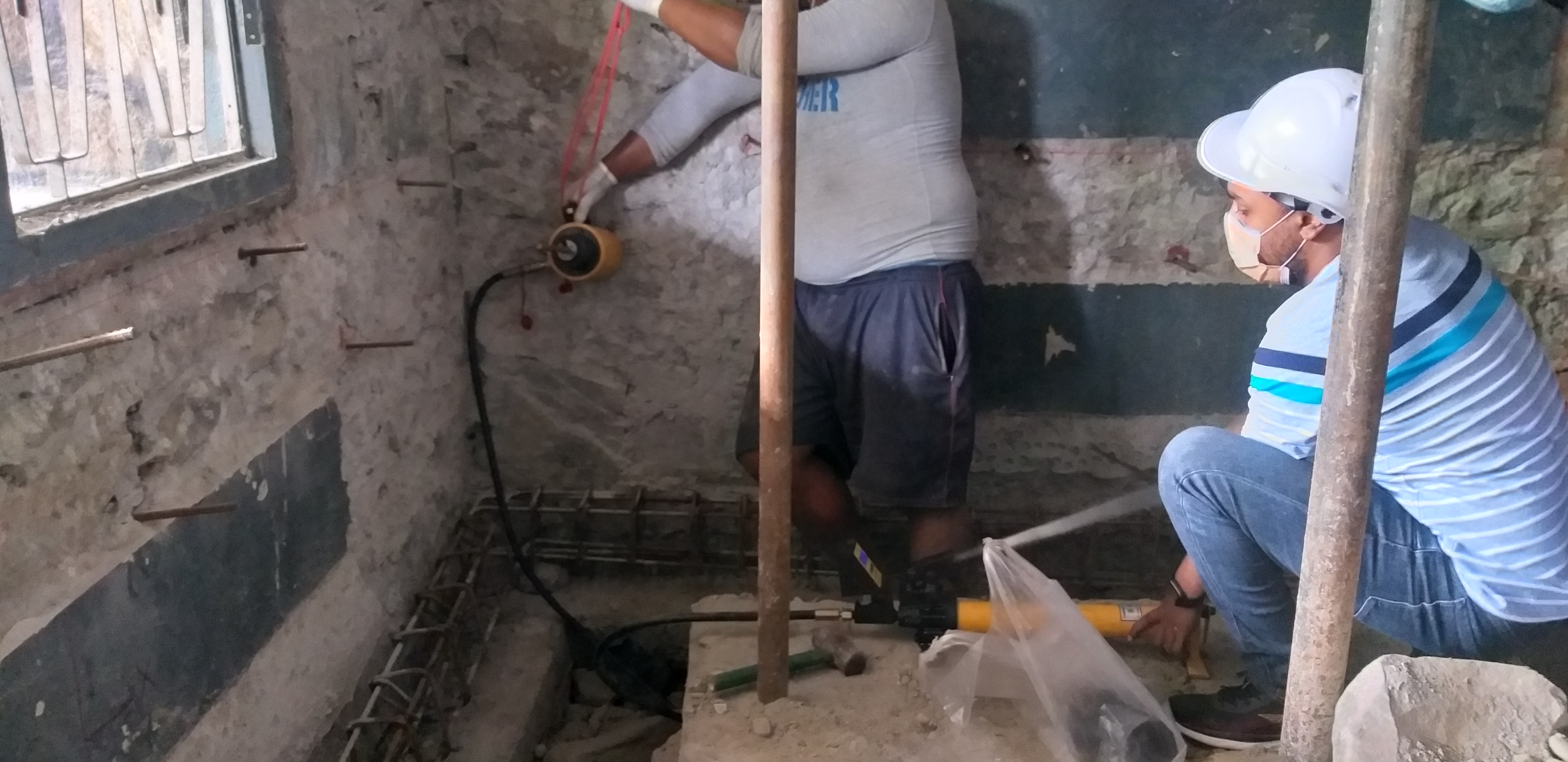
Test conducted to assess the pull out resistance of rebar against bond strength between rebar-bonding material-masonry/concrete surface, cone failure of the masonry/concrete material, and tensile failure of rebar itself.
Bamboo Characterization
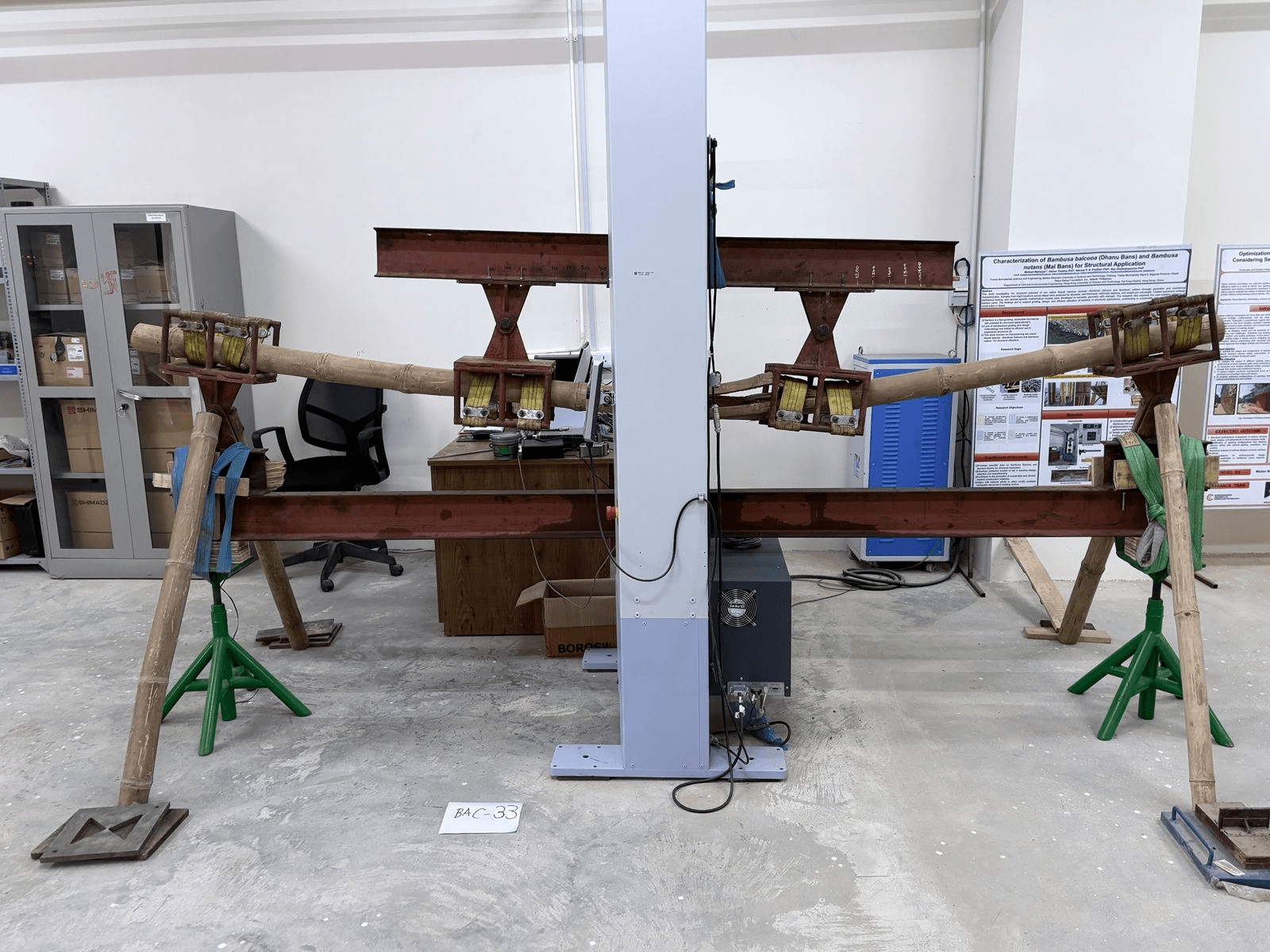
Bamboo characterization is the science of understanding this grass as a structural material. It involves testing for tensile strength, compressive capacity, flexural stiffness, and node distribution. Without characterization, bamboo is just a plant. With it, bamboo becomes an engineered material — predictable, reliable, and code-ready for earthquake-resistant construction.

